
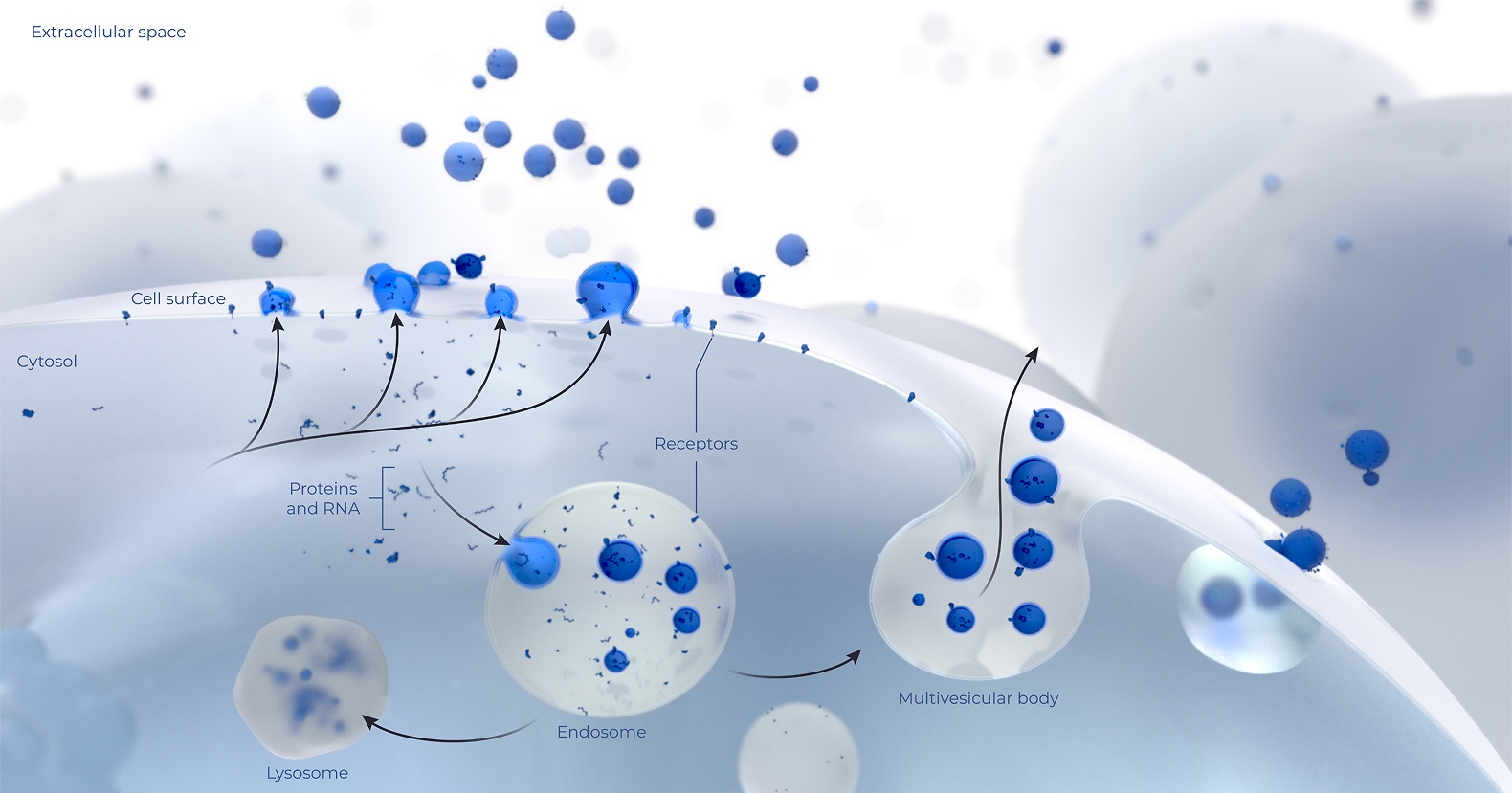
When the mechanism is the story.
Your mechanism is novel, which means there is no shortcut to explaining it. Every shortcut has cost you credibility.
A single inaccurate frame in front of a sophisticated audience does not just confuse. It erodes trust in everything around it.
Doing it right is a discipline of its own, one we call mechanism visualization.
What we build when the mechanism has to move.
Mechanism of Action (MoA)
The argument the room can follow, the central sequence that turns a novel mechanism into a believable claim.
Case note: Kartos Navtemadlin →Mode of disease animation
The biology of the disease itself, the context that makes the intervention matter.
Pathway & signaling animation
The cascades and interactions where the science gets technical, made legible, kept accurate.
Device & delivery mechanism animation
How the therapy reaches its target, the engineering as carefully rendered as the biology.
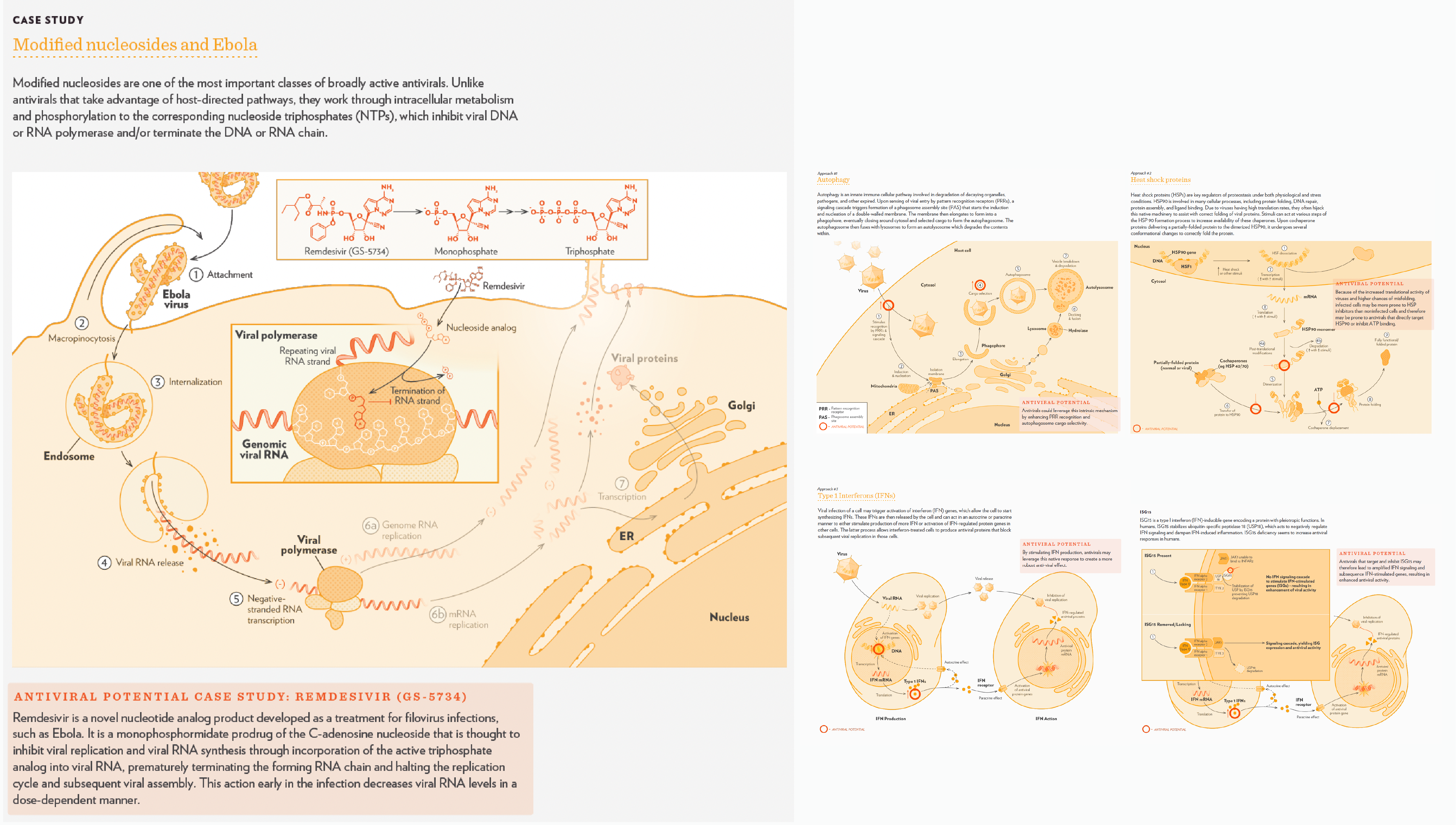
Host-directed antivirals turn the cell's own defenses against the virus. Four pathways, four ways to intervene.
Four dense cellular cascades, legible only to specialists, with no way to weigh one approach against another.
We rendered each pathway in one visual language and marked where a drug could intervene. Four strategies, one surface, finally comparable.
Questions about mechanism visualization.
What is a mechanism of action animation?
A scientifically validated visual sequence that shows how a therapy acts on its biological target — built so a specific audience can follow and believe the science, frame by frame.
How do biotech companies explain their mechanism to investors?
By building the argument backward from what the investor must believe, then animating only the science that produces that belief. Accurate, legible, and paced for the room where the decision gets made.
How much does an MoA animation cost?
Cost scales with scientific complexity, length, and audience, not a per-second rate. We scope from the argument and the data room, then size the work to the claim it has to carry.
What makes a scientific animation accurate?
Certified medical illustrators validating every frame against current literature, and a strategist ensuring the sequence makes a defensible argument. Accuracy is the method, not a final check.