
The Science
Solid tumors are roughly 90% of cancers, and they have resisted the cell therapies that transformed blood cancers. Two barriers stand in the way: there is rarely a target unique to the tumor, and the tumor builds an environment that suppresses immune attack.
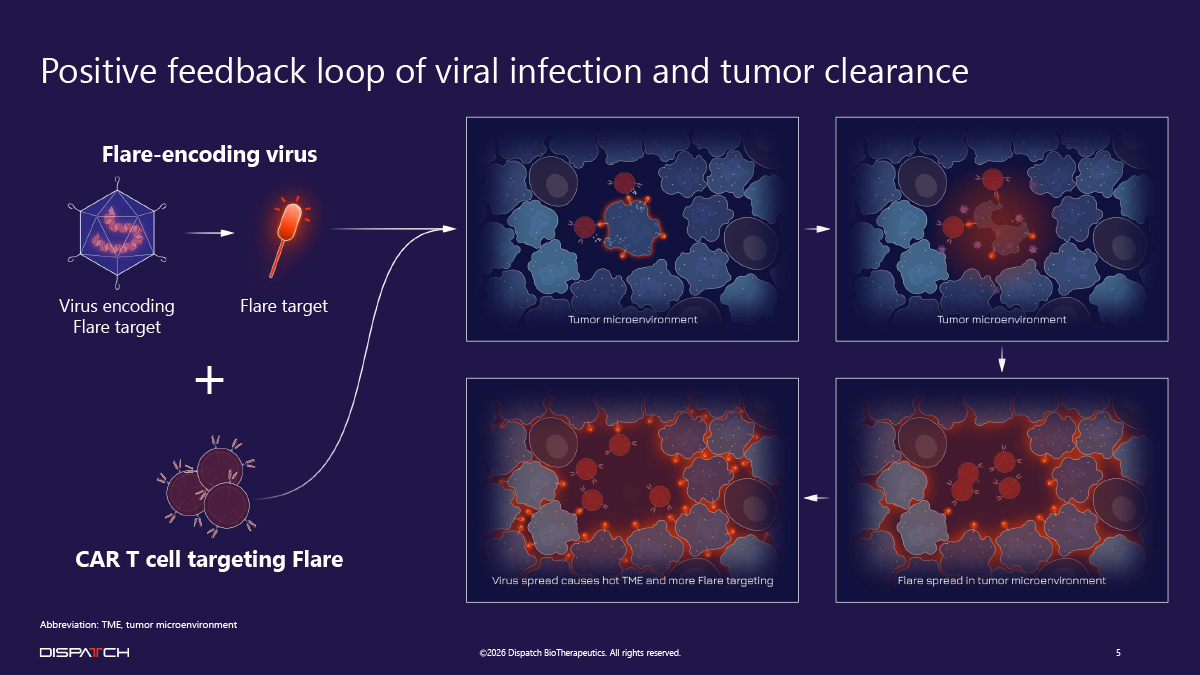
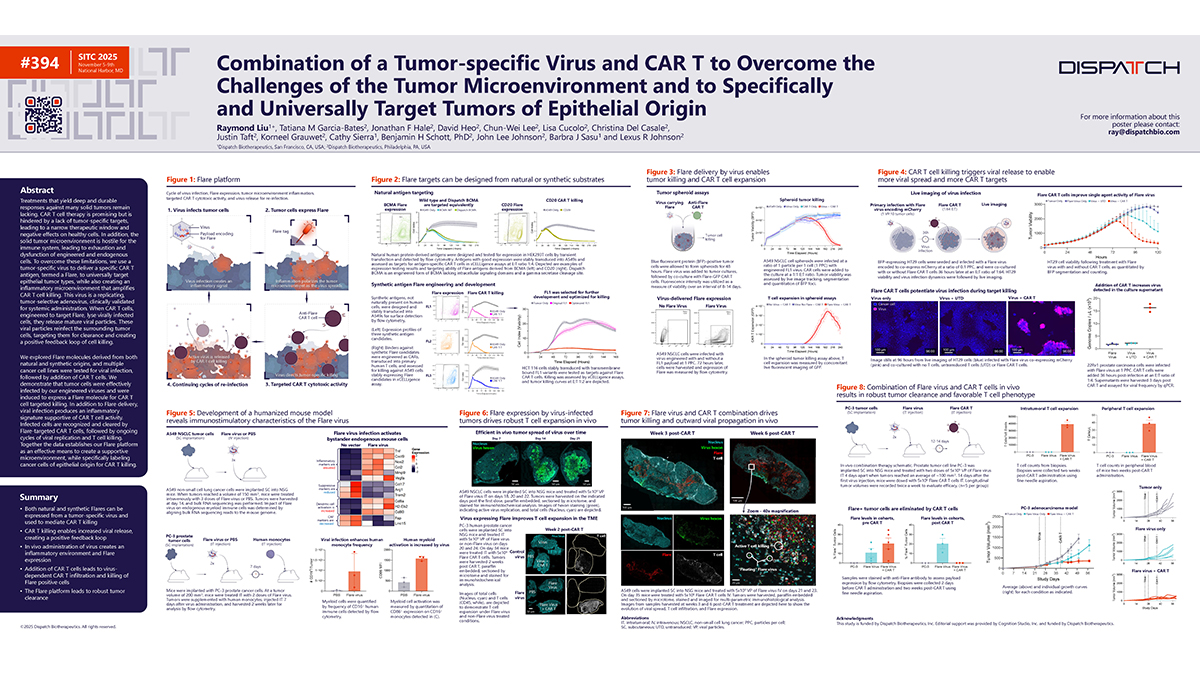
Dispatch Bio's Flare™ platform is engineered to defeat both. A viral vector delivers a synthetic universal antigen — Flare — that tags tumor cells while dismantling the immunosuppressive microenvironment, directing the immune system to find and clear the cancer without harming healthy tissue. The platform converges technologies from four leading academic laboratories.
The Challenge
The value had to be articulated, not demonstrated.
When Dispatch was founded in 2022, there was no clinical data to point to and no public science to cite. The company still had to convince investors to fund it, partners to work with it, and the field's best scientists to join it. The platform was a convergence of complex technologies, easy to undersell and hard to explain in a breath. A first clinical program was years out. The value had to be articulated, not demonstrated — and articulated once, coherently, in a form that would still hold years later, when the company finally stepped into the open.
The Outcome
The value proposition set at the beginning was the one the company launched on.
The articulation built in stealth was still the operating narrative when Dispatch emerged into public view in 2025. It did not have to be rebuilt for launch. The same idea that framed the science at inception carried through the platform's maturation and into the market. One coherent account of what the science is worth, intact from the first day to the public one.
Details reflect Dispatch Bio's public emergence from stealth in 2025 (Flare™ platform).