cognitionstudio.com Practices Science Communications Venture Design One Health
Cognition Science Communications
Our Expertise How We Work What We Build Case Notes Start a conversation →
Home / Case Notes / eGenesis · reframing xenotransplantation

How a xenotransplantation company turned a fear narrative into the medical-innovation story the field now tells

Today eGenesis is read as a medical breakthrough rather than an ethical risk — on the trust-first foundation we set, now carried into first-in-human trials.

Challenge A fear frame blocking fair evaluation
Domain Xenotransplantation
Stage S-1 era → IND-enabling · 2020–2023
Audience Investors · media · clinical & scientific
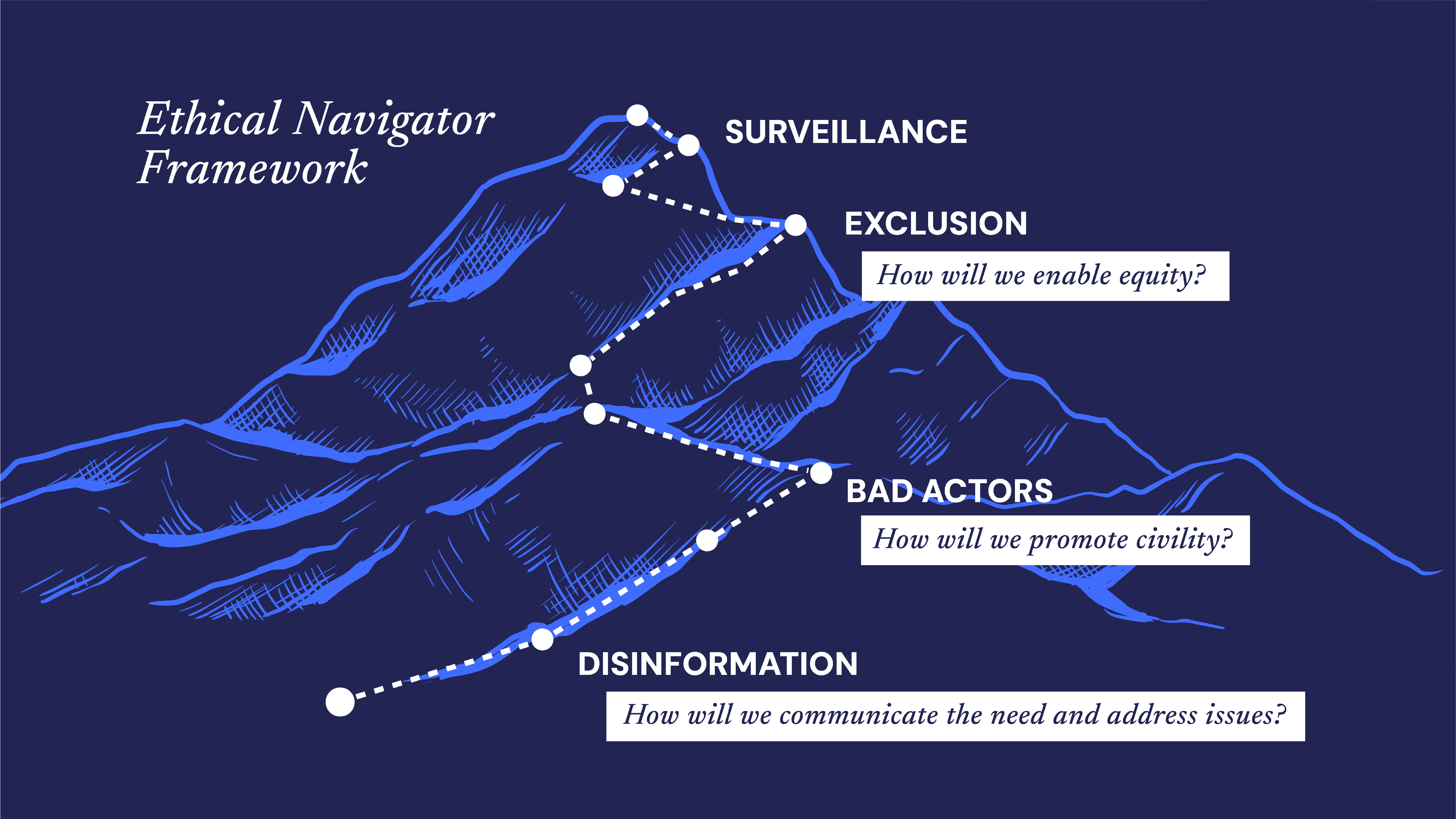
The Ethical Navigator Framework: a hand-drawn mountain with a dashed summit route marking the concerns that surround xenotransplantation — surveillance, exclusion, bad actors and disinformation — each reframed as a guiding question: how will we enable equity, promote civility, and communicate the need and address issues.
The Ethical Navigator — a de-risk framework used to change the narrative, and lead with the medical need.

The Science

eGenesis engineers pig organs a human body will accept. Xenotransplantation faces two barriers at once: the human immune system rejects porcine tissue, and the pig genome carries endogenous retroviruses that could infect a human host.

eGenesis answers both with multiplex CRISPR editing at a scale no one had reached — inactivating the viral sequences across the genome and adding human genes that temper rejection. The result is a source animal whose kidney can be transplanted into a person. The mechanism is what turns the organ shortage from permanent into solvable.
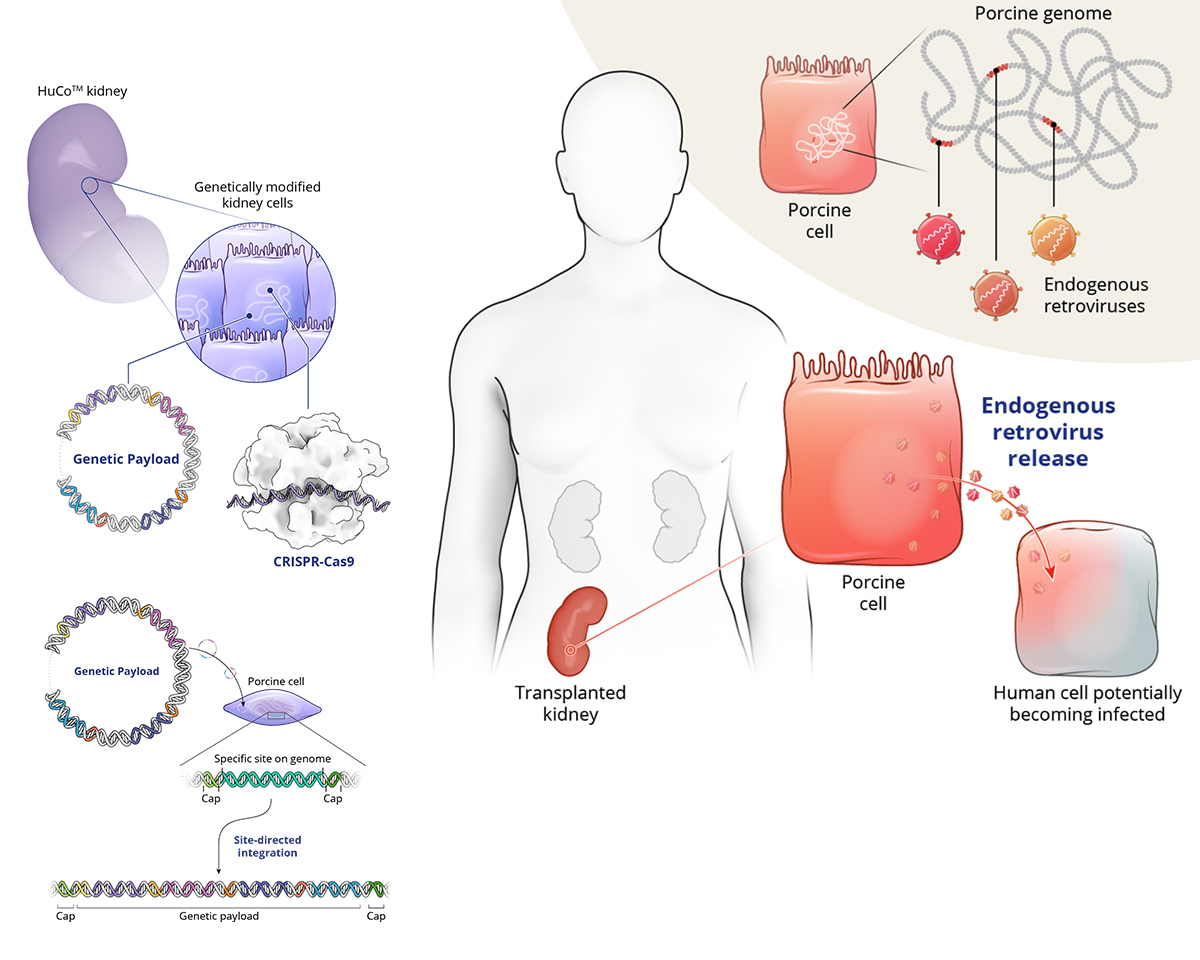
Science-explainer illustrations: a genetically modified HuCo kidney and its edited cells, a circular genetic payload placed by CRISPR-Cas9 through site-directed integration, and the endogenous-retrovirus risk — porcine cells releasing retroviruses that could infect a human cell — that a gene-edited source animal is engineered to eliminate.
Explaining the platform in a plain, teachable register — from multiplex editing to why the retrovirus problem had to be solved before the first transplant.
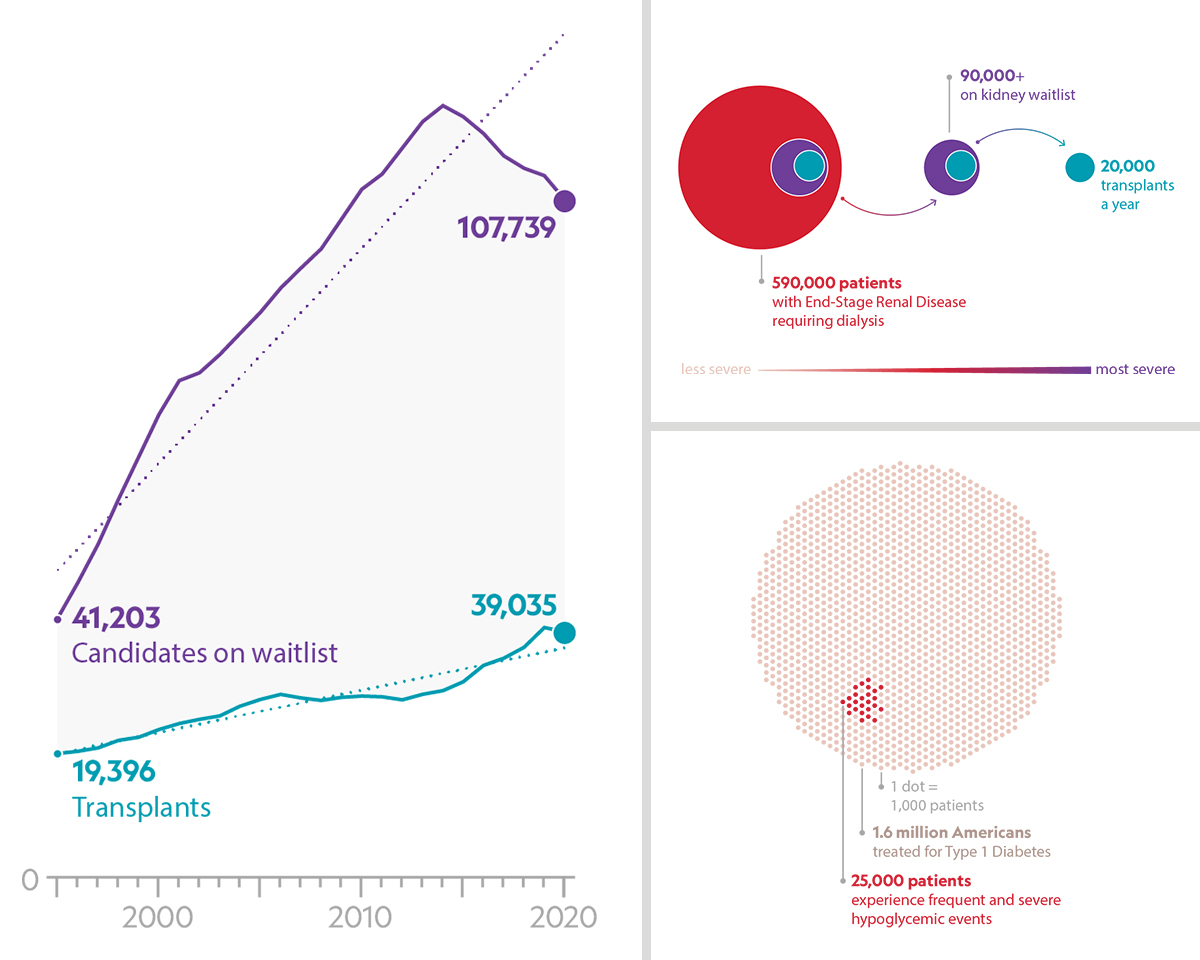
Unmet-need data visualization: the widening gap between kidney transplant candidates on the waitlist and transplants performed from the 1990s to 2020, the 590,000 patients with end-stage renal disease requiring dialysis narrowing to 20,000 transplants a year, and a dot grid showing severe hypoglycemic events among 1.6 million Americans with Type 1 diabetes.
Leading with the need — data visualizations that make the medical necessity legible before the science is ever defended.
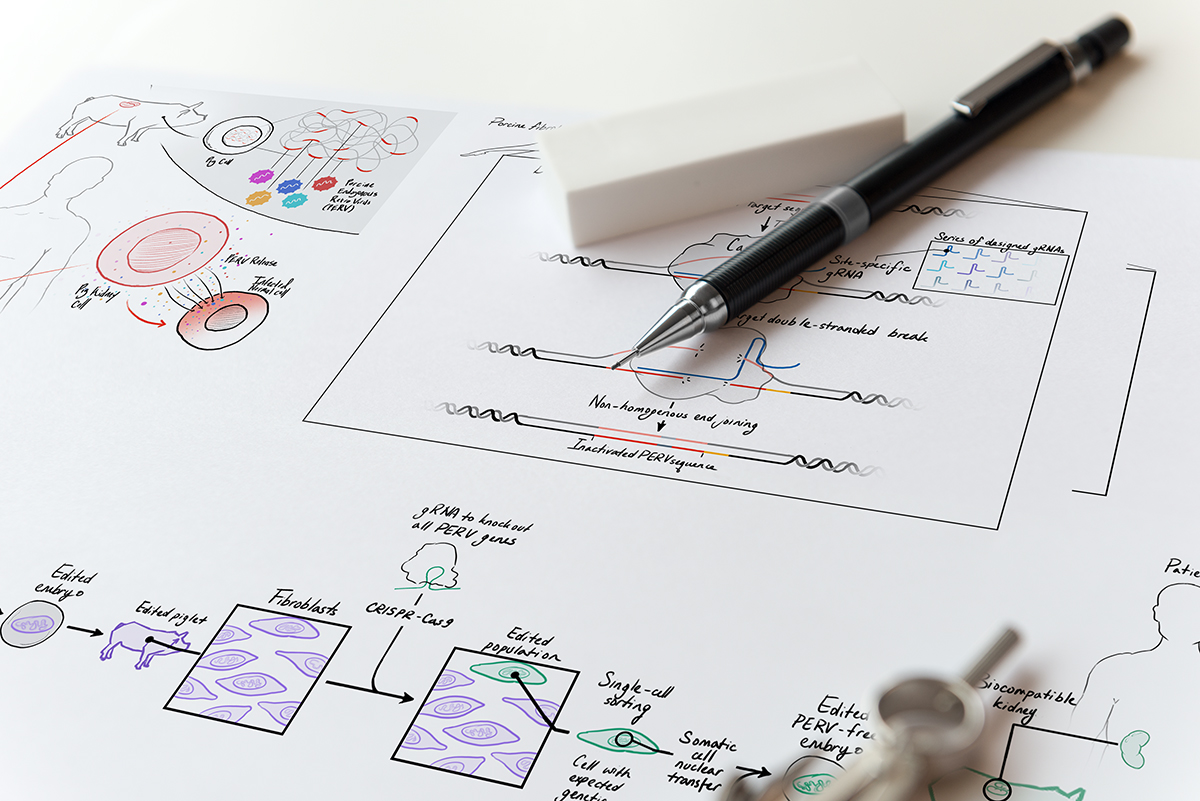
Working pencil sketches reasoning through the science before any visual was finalized: PERV knockout with CRISPR-Cas9, editing an embryo through fibroblasts and single-cell sorting to somatic cell nuclear transfer, and the path to a biocompatible, PERV-free kidney.
Reasoning through the mechanism by hand — legibility engineered from the science outward.

The Challenge

As long as the first question was whether the science should exist, no one was asking whether it worked.

When eGenesis came to us in 2020, it was building toward IND-enabling work and its first human transplants — the moment a company raises on its story, when investors, media and clinical experts all have to judge the science on its merits. The frame was in the way. For years the story had been told as an ethical puzzle about using animals for parts; even the company's own funding milestones were framed defensively, around making pig organs safe.
The Work

This is strategy, not copywriting. We read the data, mapped the beliefs, and built the argument. 

The method was the Science Value Proposition. We set the SVP on medical necessity — eGenesis exists to close a life-and-death gap in organ supply, not to use animals. From that root we built the brand as an Ethical Navigator: leading with medical need, trust and clarity, and teaching the science in a plain explanatory register so audiences could reach their own conclusions.

We anchored credibility in recognized authority — from George Church's platform science to leading transplant surgeons — and in the patients and families who live the organ shortage. Then we architected the brand across stages, from IND-enabling to clinical to commercial, so the story could grow with the pipeline rather than be rebuilt at each turn.

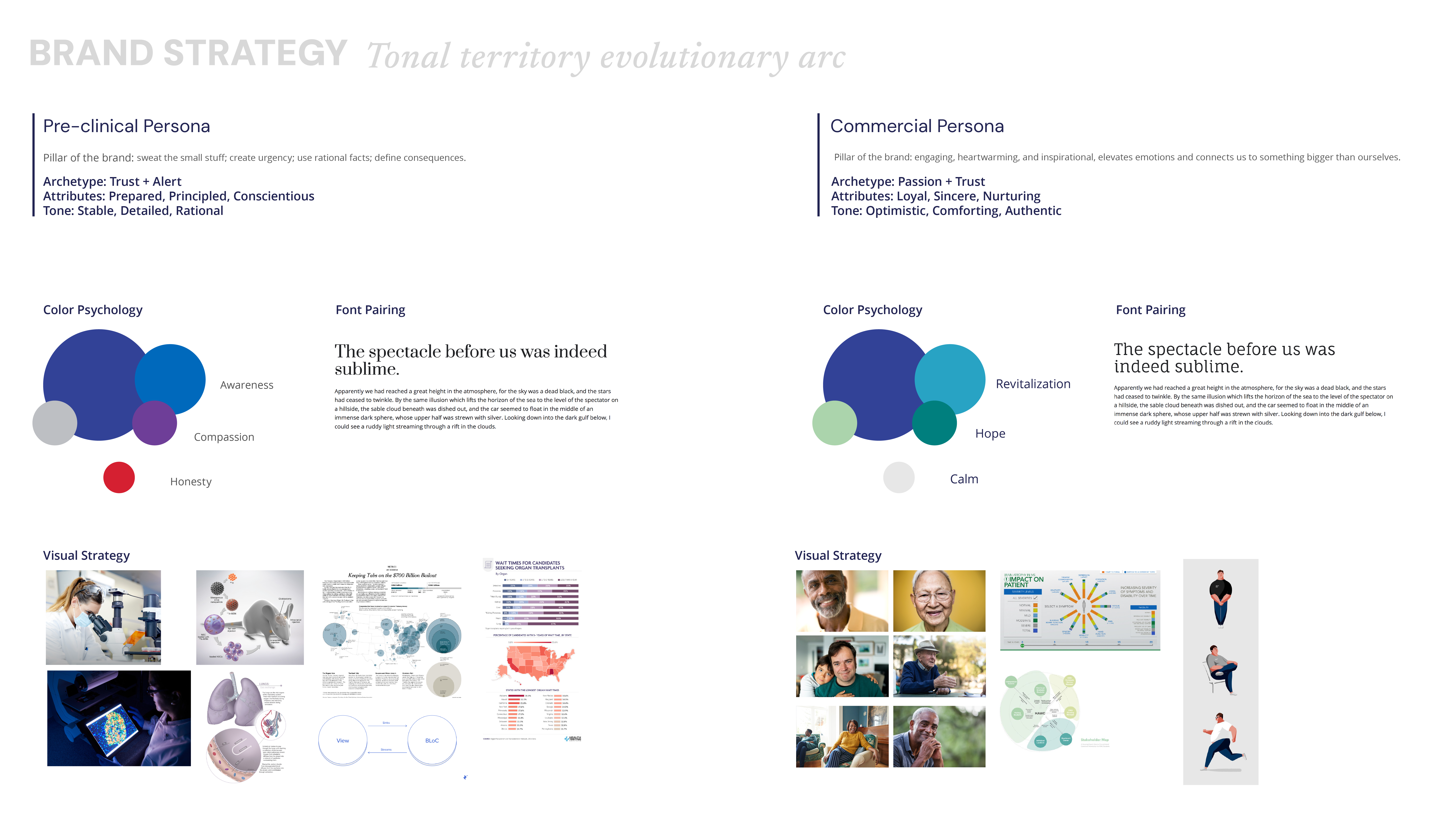
Brand strategy boards showing the system built to grow with the pipeline: a pre-clinical persona keyed to awareness, compassion and honesty, and a commercial persona keyed to revitalization, hope and calm, each with its own color psychology, font pairing and visual strategy direction.
The deliverable — a staged brand architecture with its personas and futurism direction, built to grow from pre-clinical through commercial.

The Outcome

The frame we set is the frame that stuck.

Today the eGenesis story is told, in the mainstream, in the terms we built — the science once covered as an ethical risk now taught through medical necessity. In May 2025, National Geographic ran it under the line that a pig could save your life, teaching the science through organ visuals and unmet-need data in the register we established. The company has since been named to Fast Company's 2026 Most Innovative Companies, its platform has FDA-cleared human trials with patients transplanted, and it sits on the panels shaping where the field goes next.

Before — the fear & safety frame
The science told through a design-and-ethics lens
A $100M raise framed around making pig organs safe
After — the medical-innovation frame
Peer-reviewed long-term primate survival — the credibility milestone
"This pig could save your life" — unmet-need data and organ visuals
Named to Most Innovative Companies · on the BIO panel on the future of the field

Cognition set the frame and made the science legible. We do not claim our work caused the FDA clearance, the clinical results, or any publisher's editorial choices — the milestones are eGenesis's; what we point to is the register and visual language the coverage now uses.
The takeaway

When a science is controversial, the work is not to defend it but to reframe it. Move the audience's first question from whether it should exist to what need it answers, and the science can finally be judged on its merits.

Related proof

More of the same craft.

See the capability →
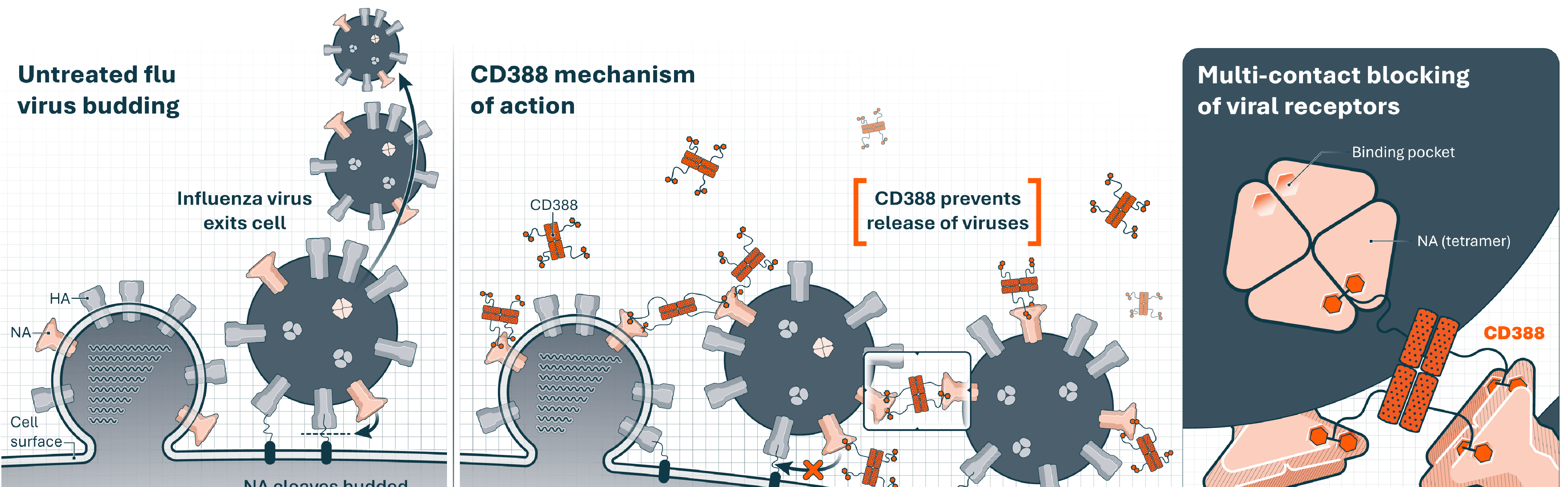
CD388 mechanism of action — multi-contact blocking of viral neuraminidase to prevent influenza release
Antivirals · Investor

Making a novel drug-Fc conjugate legible before a Phase 2b readout.

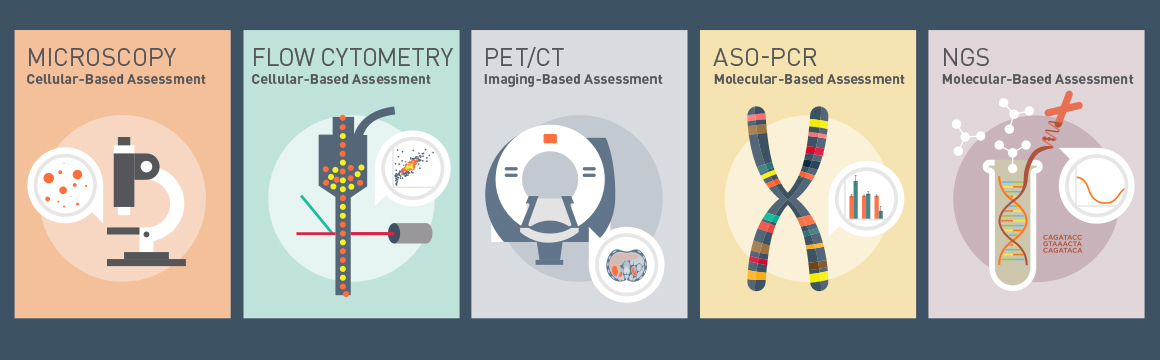
The unbranded KnowMRD education system — brochures, case studies and clinical data summaries
MRD diagnostics · Medical Affairs

Building clinical belief in a new category of cancer testing.

Have a science the room is asking the wrong question about?

Start a conversation →
Explore